



Leadership can be incredibly rewarding.
It can also feel like everyone needs something from you.
Your team needs support.
Your own manager has expectations.
There are KPIs to meet, workloads to manage, difficult conversations to have and decisions that need to be made.
And somewhere amongst all of that, you still have your own work to get through and a life outside of work that matters too.
Many leaders genuinely care about their people and want to be available when their team needs them.
But how do you support your team without becoming available for everything?
How do you hold boundaries when the work doesn't disappear just because you've finished for the day?
How do you support staff who are already stretched when you're stretched too?
And what do you do when the things affecting your team aren't entirely within your control?
These aren't hypothetical challenges.
They're some of the things leaders across the helping professions have shared with me.
“I need to provide support, despite my immense workload.”
“My line manager is unavailable due to their workload so issues aren’t resolved”
“I have tried to not work more than expected hours but have fallen behind.”
And perhaps one of the clearest descriptions of what leadership can sometimes feel like:
“Focus at the top is KPIs and focus at the bottom is supporting people, you just feel stuck.”
If some of this sounds familiar, you're exactly the kind of leader my work is designed to support.
What leaders have told me they actually need.
In my 2026 survey with leaders across the helping professions:
76% wanted greater focus on building psychologically safe team cultures.
76% wanted stronger supervision and reflective practice structures.
70% wanted greater leadership capability in managing psychosocial risk.
65% wanted greater clarity around role design and workload expectations.
What stood out to me was that simply knowing more about psychosocial hazards wasn't their highest priority.
Leaders wanted support with what to actually do about the challenges they're experiencing.
That's an important distinction.
Because telling a leader to set better boundaries isn't particularly helpful if:
“More and more work requirements [come] with no additional FTE”
Or:
“Everyone is stretched beyond capacity and scope due to service needs”
And telling someone to simply raise their concerns misses the experience of leaders who have already done exactly that:
“I continue to provide feedback, but it hasn't seemed to be effective.”
My work with leaders starts with the leader themselves.
Before we look at how you lead and support other people, we look at your own self-leadership. Your boundaries, your wellbeing, your workload and capacity, what you're taking responsibility for, and what you need to be able to lead sustainably.
From there, we can look at how you lead others, how you support your team, and how you navigate the challenges and expectations that come with your role.
Because you can't separate how you lead others from how you're looking after and leading yourself.
What Leaders Say About Working With Me
How I Can Help
-
Support with my Leadership
I'm looking for support for myself as a leader.
-
Support for our Leaders
We're looking for support for leaders within our organisation.
-
Support for my Team
I'm looking for additional professional support for the people I lead.

Hi, I’m Jazmin (She/Her)
I'm a qualified and Registered social worker with the Australian Association of Social Workers (AASW), registered supervisor, consultant and educator.
Over the past decade, I've worked across mental health, disability, schools, housing, child protection and government, including frontline practice and leadership roles.
I've worked with people experiencing significant vulnerability and complexity, and I've experienced many of the competing demands that come with working and leading in helping professions myself.
So my work isn't based on an idealised version of leadership where every problem can be solved by setting a better boundary, managing your time differently or having another wellbeing strategy.
Sometimes:
“Resourcing is a huge barrier, as it is not as easy to just say ‘do what you can do’ when demand is so high”
I understand that.
My role isn't to pretend those organisational realities don't exist.
It's to give leaders and helping professionals dedicated space to reflect on what's happening, consider what's within their control, strengthen their practice and work through how they want to respond.
I hold a Master of Social Work, Master of Mental Health and Graduate Certificate in Autism, and I'm a Registered Supervisor with the Australian Clinical Supervision Association (ACSA).

Accreditations


As Featured




Not sure where to start?
You don't need to be ready for supervision, consultation or training to start thinking about how you work, lead and support others.
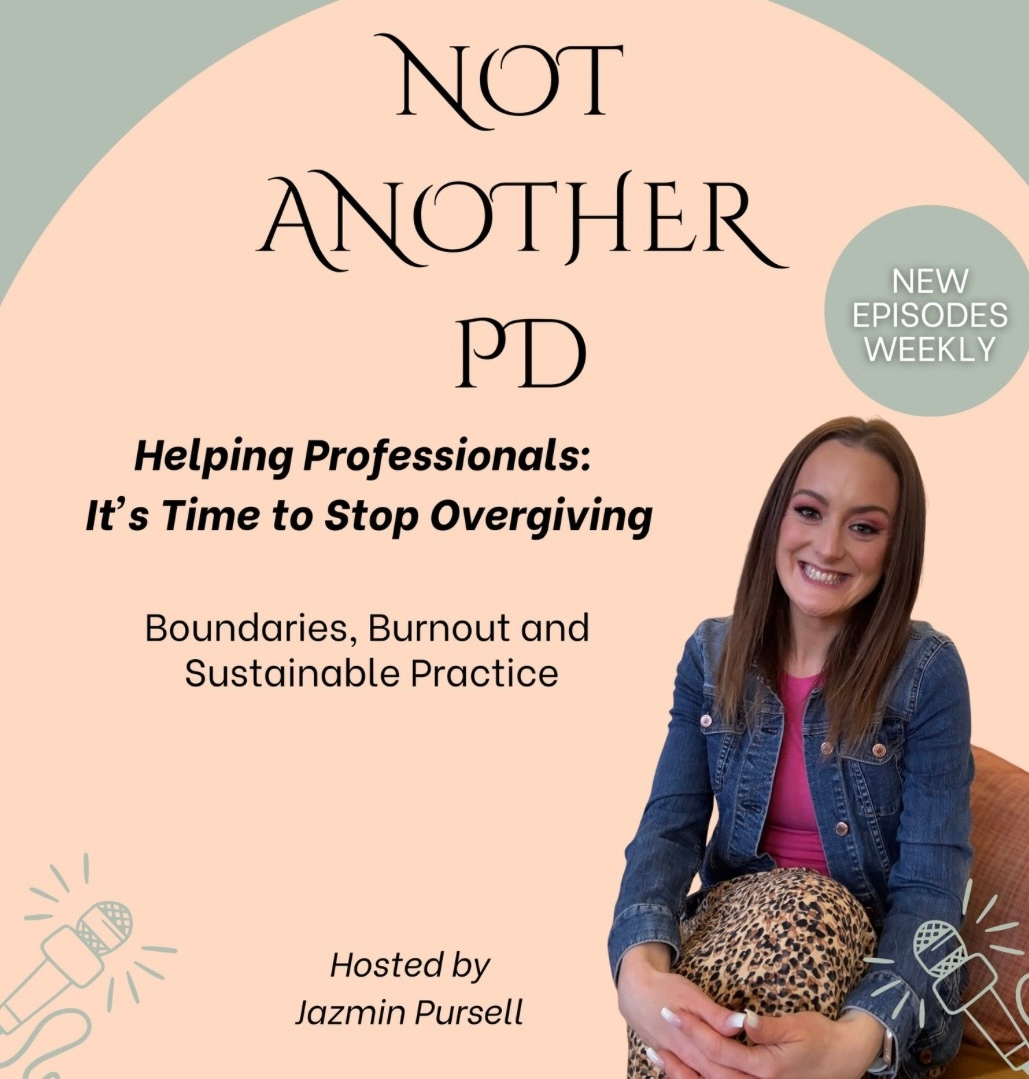
If you're looking for somewhere to start, explore my free resources for leaders and helping professionals, or listen to Not Another PD for practical conversations about leadership, professional boundaries, reflective practice, workplace wellbeing and the realities of working in the helping professions.
Ready for Support?
Maybe you already know exactly what you need.
Or perhaps you simply know:
Something about the way we're currently working isn't sustainable.
You don't need to choose the perfect service before you contact me.
Many of my individual and organisational services begin with an enquiry because I want to understand what's happening, what you're looking for and whether my experience and scope of practice are the right fit.
Tell me a little about what you're navigating and who you're looking to support.
We'll start there.